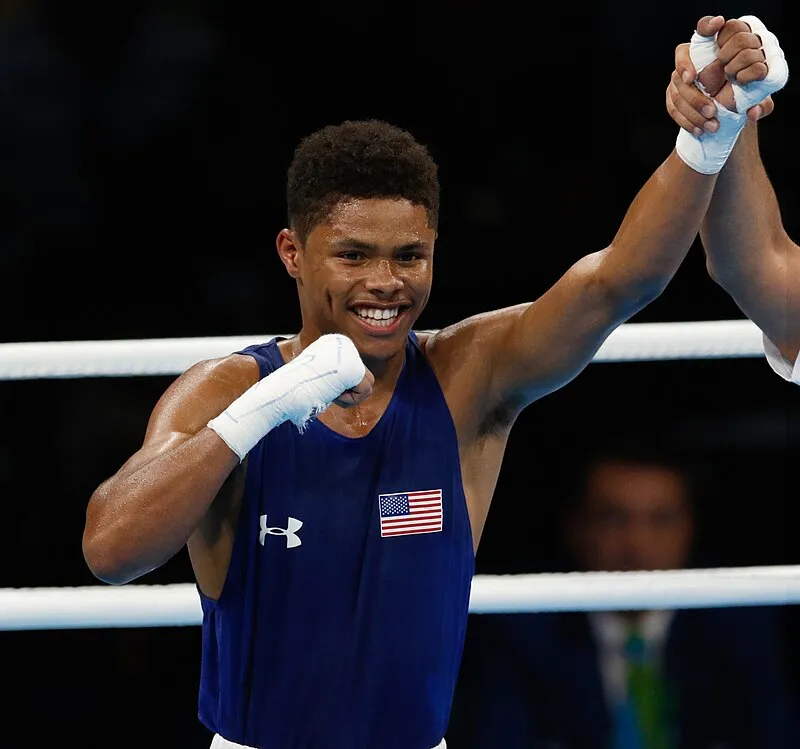
Dmitry Bivol Net Worth 2026 - From Obscurity to Championship Wealth in the Light Heavyweight Division

Photo: Вячеслав Евдокимов, CC BY-SA 3.0, via Wikimedia Commons
In the economics of professional boxing, visibility is currency. Fighters who toil in undercard obscurity — however talented — rarely accumulate the financial rewards their skills might otherwise command. Dmitry Bivol spent the better part of his professional career in precisely that position: a technically superior world champion who remained largely unknown to American casual fans. Then came May 7, 2022, and a performance against Canelo Alvarez that changed everything. By 2026, Bivol's estimated net worth stands at approximately $20 million, a figure that would have seemed improbable just five years earlier.
Estimated Net Worth (2026): $20 million
Early Career: Championships Without Commercial Recognition
Born in Tokmok, Kyrgyzstan, and raised in St. Petersburg, Russia, Bivol compiled an outstanding amateur record before turning professional in 2014. His early professional career unfolded largely outside the American market's awareness. Managed by Andrei Ryabinsky's World of Boxing promotional outfit and later working with Top Rank in the United States, Bivol accumulated the WBA light heavyweight title in 2017 with a stoppage of Trent Broadhurst in Australia.
What followed was a series of credible title defenses against opponents including Sullivan Barrera, Joe Smith Jr., Lenin Castillo, and Umar Salamov. Bivol was undefeated and a legitimate world champion, yet his per-fight earnings during this period rarely exceeded $1 million to $2 million. The light heavyweight division, historically one of boxing's most talent-rich weight classes, has never generated the commercial infrastructure of heavyweight or the pay-per-view appeal of super welterweight. Bivol was championship royalty in a financial economy that rewarded the division modestly.
His total earnings through the end of 2021 are estimated at approximately $5 million to $7 million — respectable for a fighter of his tenure but nowhere near commensurate with his technical excellence.
The Canelo Upset: A Single Night That Rewrote the Financial Equation
When Canelo Alvarez moved up to light heavyweight to challenge Bivol in May 2022 at the T-Mobile Arena in Las Vegas, the commercial framing was straightforward: Canelo was the star, Bivol was the opponent. The Mexican superstar had beaten Sergey Kovalev at light heavyweight in 2019 and was seeking another belt to add to his collection. Bivol was given little chance by the mainstream boxing media.
The actual fight told a completely different story. Bivol dominated twelve rounds, outworking and outboxing the sport's biggest pay-per-view draw with a masterclass of distance management and sharp combination punching. The unanimous decision victory shocked the boxing world and, crucially, transformed Bivol's commercial standing overnight.
His purse for the Canelo fight is reported to have been in the range of $5 million to $8 million — significant by his previous standards but relatively modest given the event's commercial scale. The real financial consequence of the victory was what it unlocked for the future: a rematch clause, mandatory status in multiple sanctioning bodies, and the undeniable proof that Bivol could headline major events.
The Bivol-Beterbiev Era: Light Heavyweight Unification
Following the Canelo upset, Bivol's market value was fundamentally repositioned. His unification fight against Artur Beterbiev — the only other significant claimant in the light heavyweight division — became one of the most anticipated matchups in boxing. The first meeting between the two in 2024 was promoted as a genuine superfight within the division, with both fighters earning purses substantially higher than anything they had previously commanded.
Bivol's guaranteed purse for the Beterbiev fight is estimated at $8 million to $12 million, with additional revenue from streaming and international television rights. The rematch generated comparable figures. While the Beterbiev fights did not approach the nine-figure commercial territory of heavyweight superfights, they represented the ceiling of what the light heavyweight marketplace could realistically produce, and Bivol was positioned to claim the lion's share.
International Sponsorships and Brand Deals
Bivol's endorsement portfolio reflects the geopolitical complexity of his background. A Kyrgyz-born fighter representing Russia in international competition, operating during a period of significant Western sanctions against Russian commercial entities, Bivol has navigated a challenging sponsorship environment. Several Russian-affiliated brands that might historically have partnered with a fighter of his profile have faced international commercial restrictions.
Nevertheless, Bivol has secured partnerships with sports nutrition companies, regional Russian commercial brands, and international sports betting platforms active in markets where his name carries recognition. His annual endorsement income is estimated conservatively at $1 million to $2 million — meaningful supplemental revenue but not the primary driver of his financial growth.
His clean-cut image and composed public persona have made him an appealing partner for brands seeking credibility over flash. Unlike some fighters who generate sponsorship revenue through social media controversy, Bivol's commercial appeal is rooted in his reputation as a technically elite, professionally serious competitor.
Promotional Structure and Management Arrangements
Bivol's relationship with Top Rank, the Bob Arum-led promotional company that has co-promoted several of his American appearances, has been a significant factor in his commercial development. Top Rank's broadcast partnership with ESPN provided Bivol with consistent American television exposure that his earlier career lacked, gradually building the casual fan awareness that translates into commercial leverage.
His management structure through World of Boxing has been credited with patient long-term planning — declining certain fights that offered short-term purse value but limited upside, while positioning Bivol strategically for the matchups that would most effectively advance his market standing. The Canelo fight, which many observers expected Bivol to decline given the risk-reward calculus, proved to be the defining strategic decision of his career.
Real Estate and Asset Management
Bivol maintains a residence in the United States, a reflection of where his primary professional activity occurs. Real estate holdings are believed to be relatively modest compared to fighters who have operated at the top of the commercial market for longer periods. His financial management approach appears conservative — a characteristic that aligns with his in-ring style and suggests a preference for capital preservation over speculative investment.
Financial Outlook for 2026 and Beyond
At an estimated $20 million in 2026, Bivol's net worth reflects a fighter who spent years building toward a commercial breakthrough that eventually arrived in spectacular fashion. He is not yet in the financial tier occupied by Canelo Alvarez or the historical giants of the heavyweight division, but he has constructed a foundation of genuine durability.
With continued activity at the top of the light heavyweight division and the possibility of a Canelo rematch that would command significant pay-per-view revenue, Bivol's earning potential remains substantial. The fighter who once competed in near-anonymity has demonstrated that technical excellence, combined with the right strategic moment, can produce financial rewards that transcend a sport's conventional commercial hierarchies.