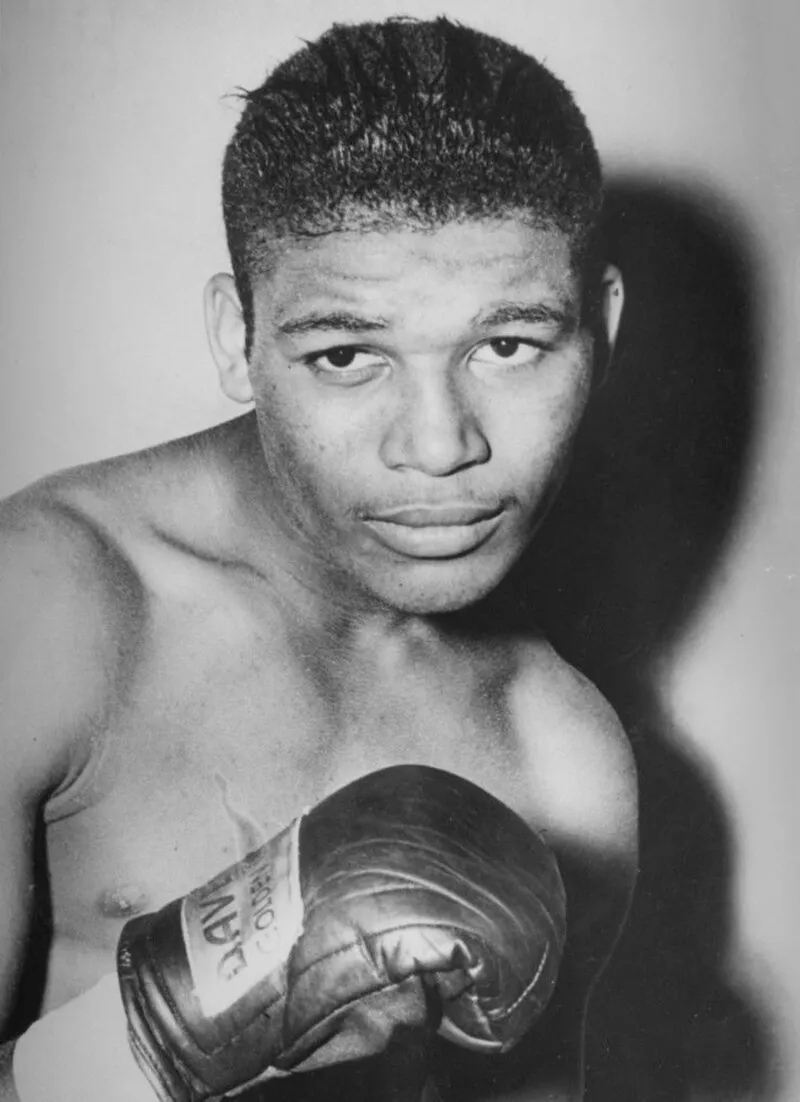
Sugar Ray Robinson Net Worth 2026 - Measuring the True Fortune of Boxing's Greatest Ever Pound-for-Pound Champion
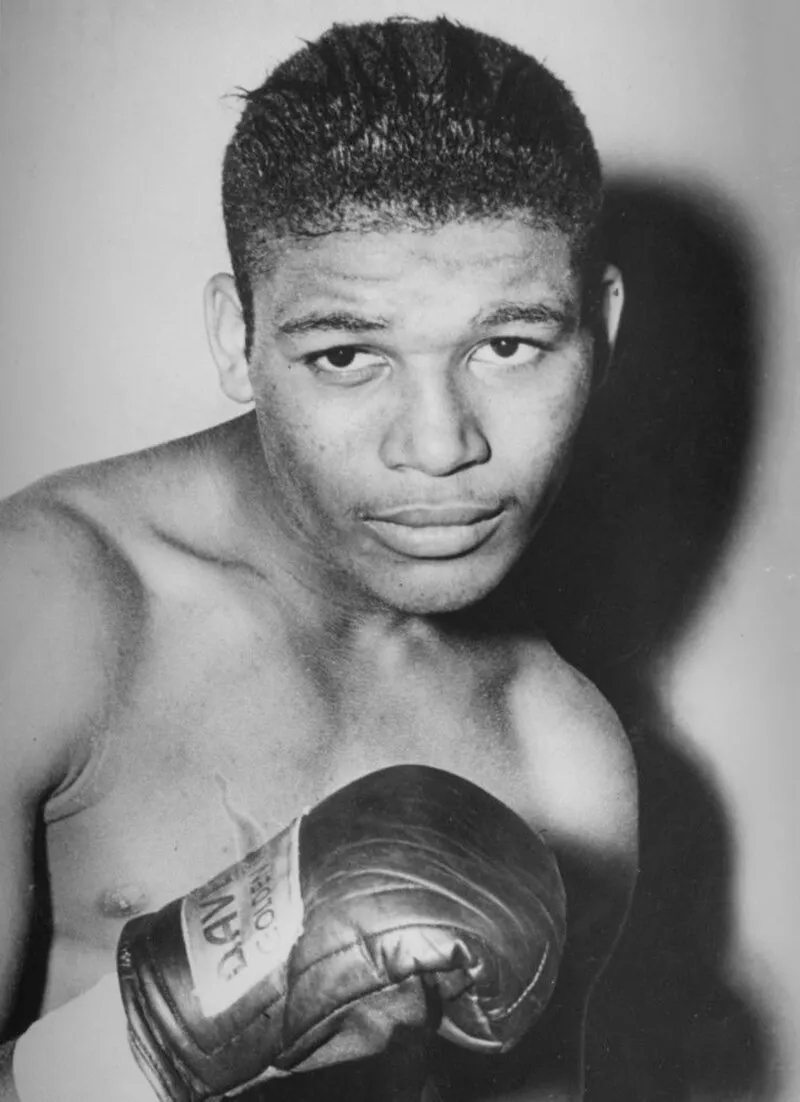
Photo of Sugar Ray Robinson, via Wikimedia Commons
Sugar Ray Robinson Net Worth 2026 - Measuring the True Fortune of Boxing's Greatest Ever Pound-for-Pound Champion
Sugar Ray Robinson is universally regarded as the greatest pound-for-pound boxer in history, a fighter whose ring artistry set a standard that has never been surpassed. His financial journey, however, was far more turbulent than his boxing record — a story of extraordinary earnings, spectacular generosity, and ultimately, a modest estate that bore little resemblance to the wealth he generated during his peak years. Adjusting for inflation and contextualizing his Depression-era and post-war purses against modern equivalents, Robinson's lifetime ring earnings translate to a figure comfortably exceeding $100 million in 2026 dollars.
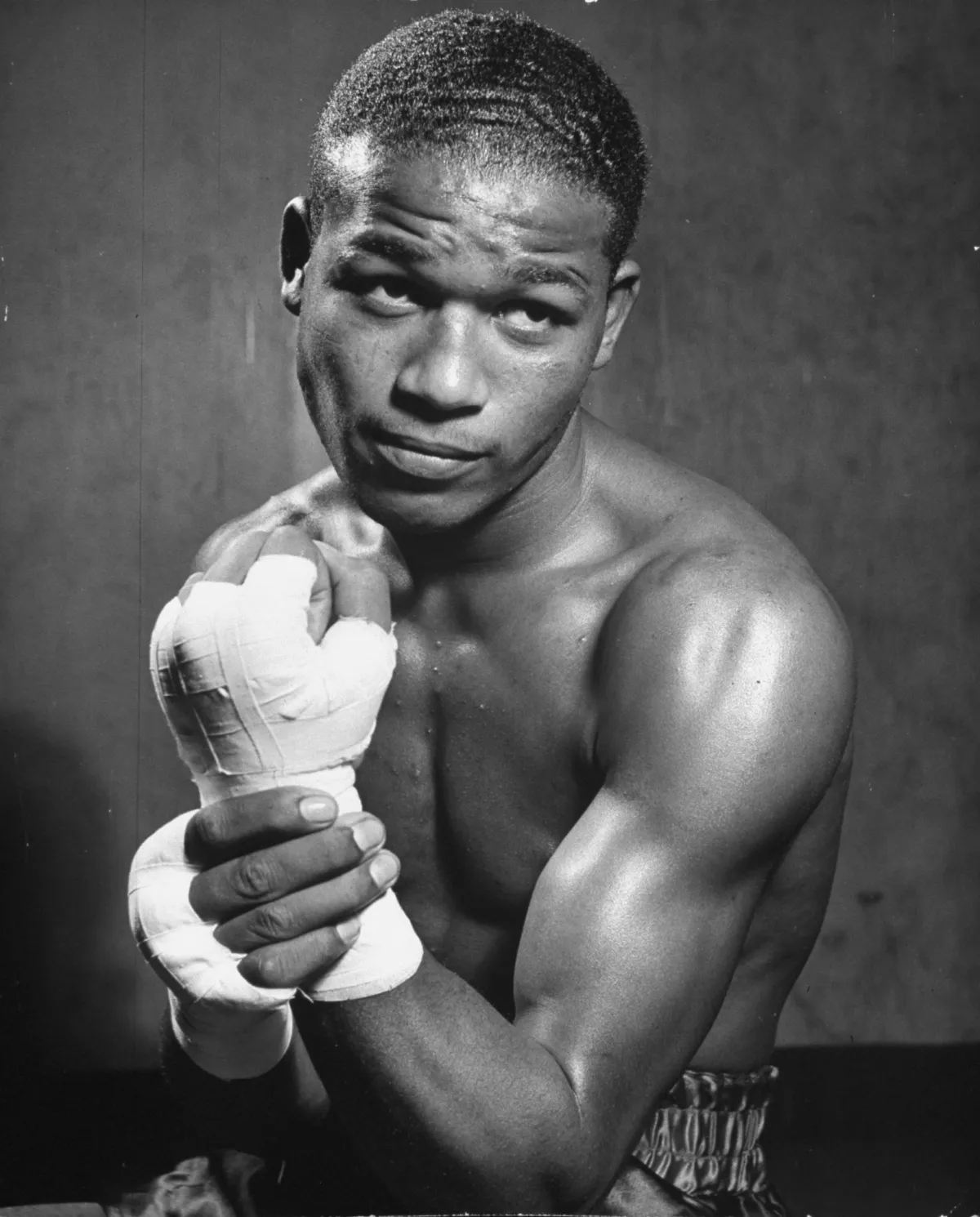 Photo: Sugar Ray Robinson, via www.christies.com
The Making of a Champion — and a Brand
Born Walker Smith Jr. in Ailey, Georgia, in 1921, Robinson grew up in Detroit before relocating to New York, where he launched an amateur career of extraordinary brilliance. He turned professional in 1940 and immediately demonstrated that his gifts extended beyond the purely athletic. Robinson understood, earlier than almost any boxer of his era, that a fighter was also a performer and a brand.
His early professional purses were modest — fights in the early 1940s typically paid between $500 and $5,000 — but Robinson's drawing power escalated rapidly. By the time he challenged Jake LaMotta for the world welterweight title in February 1951, Robinson was one of the most recognizable athletes in America. The LaMotta fight, the sixth and final encounter between the two men, is estimated to have generated a gate equivalent to several million dollars in contemporary terms, with Robinson earning a purse that experts place at roughly $500,000 in 2026 purchasing power.
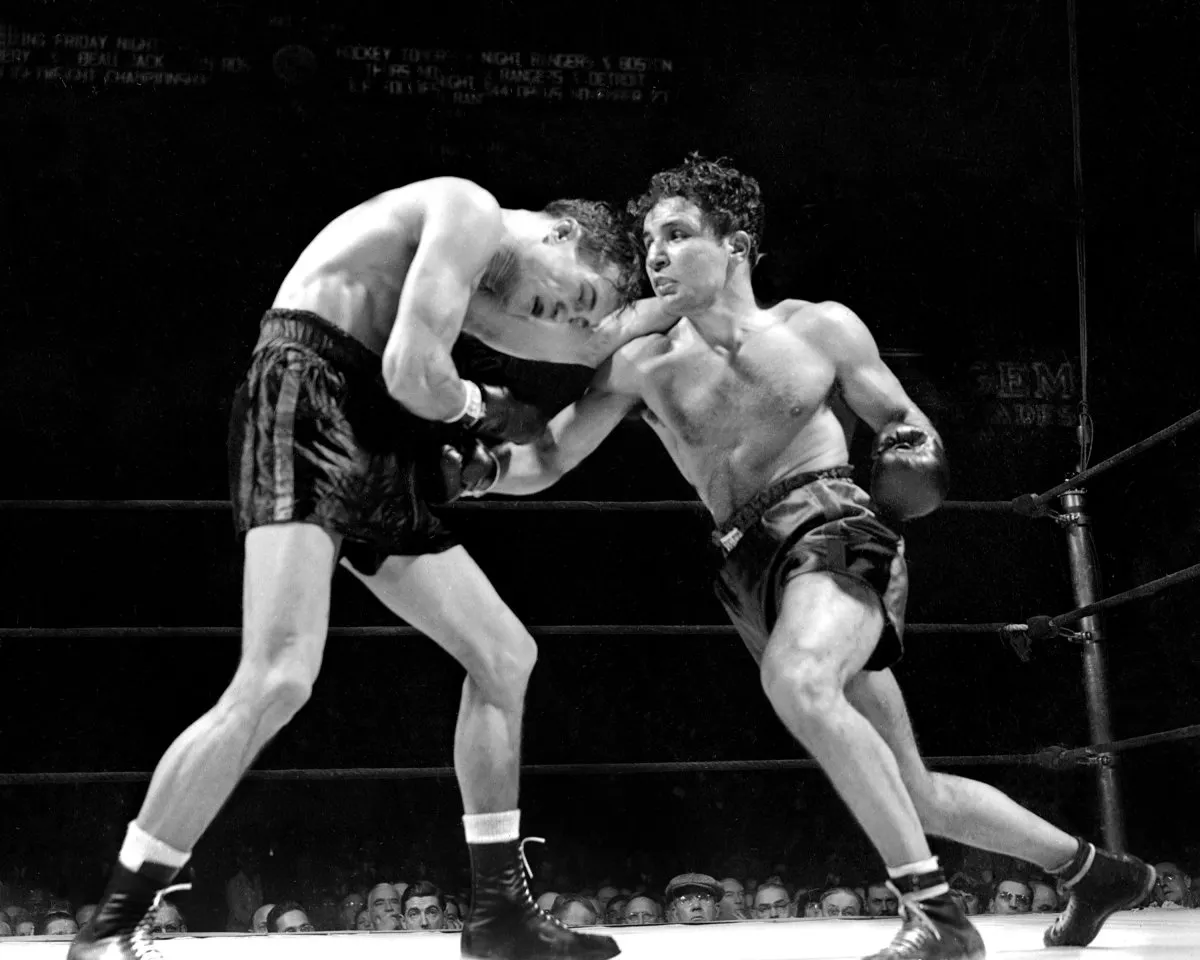 Photo: Jake LaMotta, via www.nydailynews.com
The Harlem Entrepreneur
Robinson's financial ambitions were never confined to the ring. During the 1940s and early 1950s, at the height of his athletic powers, he constructed a remarkable business empire along Seventh Avenue in Harlem that included a barbershop, a dry-cleaning establishment, a lingerie shop, a café, and most famously, the Sugar Ray's nightclub — a venue that became one of Harlem's most celebrated gathering places for entertainers, athletes, and New York society.
The nightclub alone, at its peak, was generating revenues that analysts estimate would equate to $2 million to $3 million annually in 2026 dollars. Robinson employed dozens of people, supported his extended family generously, and cultivated a public persona as Harlem's most glamorous citizen. His entourage when traveling to fights — which famously included a barber, a golf professional, a voice coach, a secretary, and a dwarf mascot — was the stuff of legend and reflected both his status and his appetite for extravagant spending.
The Fight Purses in Modern Context
Robinson fought professionally 202 times between 1940 and 1965, a volume that is almost incomprehensible by modern standards. While the majority of those fights were relatively low-paying club and arena bouts, his major championship fights generated significant revenue for the era.
His 1952 middleweight title fight against Carl Olson at San Francisco's Civic Auditorium earned Robinson an estimated purse of $250,000 in nominal terms — equivalent to roughly $2.8 million in 2026 dollars. His two fights against Carmen Basilio in 1957 and 1958, among the most commercially successful bouts of the decade, are estimated to have generated combined purses for Robinson in the range of $600,000 to $700,000 nominally, or approximately $6 million to $7 million adjusted for inflation.
Aggregating his career fight earnings across 202 bouts, financial historians estimate Robinson's total nominal ring income at approximately $4 million to $5 million, which translates to a present-day equivalent of $60 million to $80 million using standard CPI adjustment methodologies.
Television and the New Media Economy
Robinson's career coincided with the dawn of televised boxing, and he was shrewd enough to recognize the medium's commercial potential. His fights were broadcast on the Gillette Cavalcade of Sports, which dominated Friday night television throughout the late 1940s and 1950s. Television rights fees for boxing in this era were relatively modest by contemporary standards, but Robinson negotiated arrangements that included ancillary payments and appearance fees that supplemented his purse income.
By the mid-1950s, Robinson was also making appearances in films and television programs, leveraging his celebrity in ways that few athletes of his era pursued systematically. These media engagements added an estimated $500,000 to $1 million in nominal terms to his career earnings.
The Spending and the Decline
For all his financial intelligence, Robinson was also a man of extraordinary generosity and considerable extravagance. He supported family members, friends, and hangers-on with a liberality that consistently outpaced even his substantial income. The Harlem business empire, which had flourished during his peak years, began to struggle in the late 1950s as the neighborhood's economic conditions shifted and Robinson's attention remained focused on his boxing career.
By the time Robinson retired definitively in 1965, much of the wealth he had accumulated was gone. His nightclub had closed. Several of his business ventures had failed or been sold at a loss. Tax obligations — a challenge faced by many athletes of his era who lacked sophisticated financial advisors — had consumed a significant portion of his earnings.
Robinson spent his later years in Los Angeles, where he established the Sugar Ray Robinson Youth Foundation, a charitable organization focused on youth development in underserved communities. He died in April 1989 at the age of 67 from complications of Alzheimer's disease and diabetes.
The Estate and Posthumous Brand Value
Robinson's estate at the time of his death was reported to be relatively modest — estimates suggest a figure in the range of $500,000 to $1 million in 1989 dollars, a fraction of the wealth he had generated during his career. His wife, Millie Robinson, and the Youth Foundation were the primary beneficiaries.
In the decades since his death, Robinson's brand has retained extraordinary cultural value. His name and likeness appear in video games, documentaries, museum exhibitions, and countless articles that reinforce his position as the sport's defining standard of excellence. The commercial value of that brand — licensing fees, documentary rights, merchandise — generates an estimated $200,000 to $500,000 annually for his estate and foundation.
Sugar Ray Robinson's 2026 Net Worth — A Legacy Measured in More Than Dollars
In strict financial terms, Robinson's 2026 estate is estimated at approximately $2 million to $3 million, reflecting decades of posthumous brand income offset by the relatively modest assets he left at the time of his death. His lifetime earnings, adjusted for inflation, place him among boxing's all-time top earners — a fighter who generated wealth equivalent to well over $100 million in modern terms and spent it with the same extravagant flair that characterized everything he did.
The true measure of Sugar Ray Robinson's financial legacy is not the size of his estate. It is the fact that, in an era when Black athletes had almost no access to the commercial infrastructure that amplifies athletic wealth, he built a business empire, supported a community, and generated a fortune that still resonates more than three decades after his death.