Anthony Joshua Net Worth 2026 - How AJ Preserved a $200 Million Empire Through Championship Setbacks
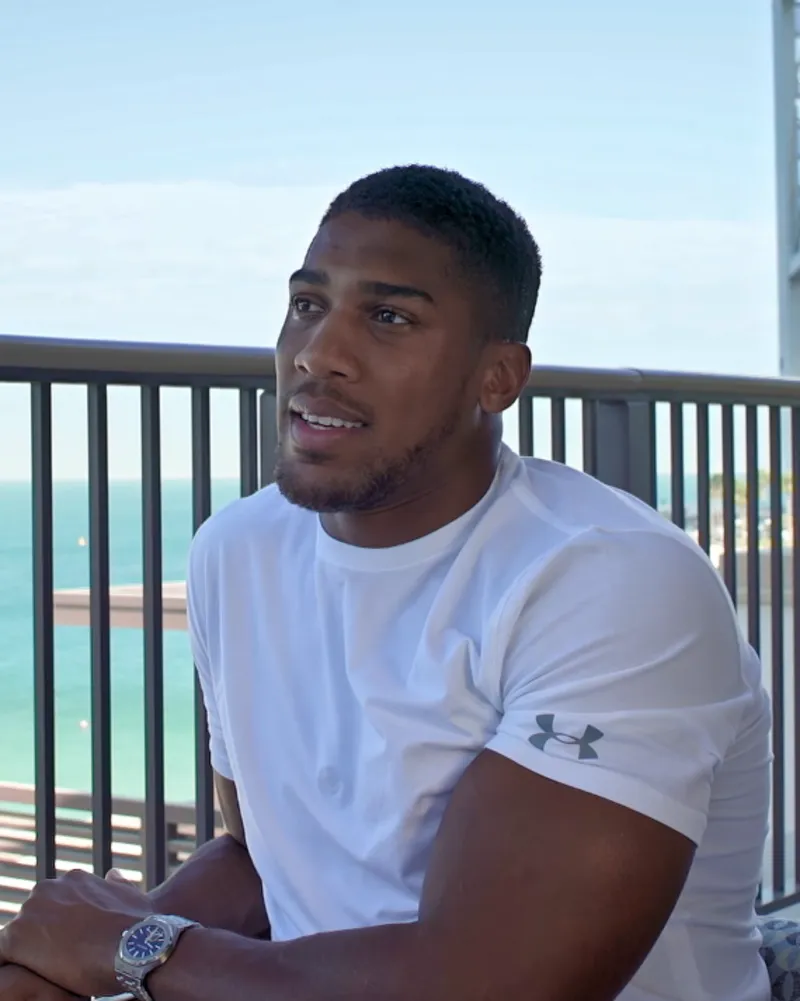
Photo of Anthony Joshua, via Wikimedia Commons
In the conventional narrative of professional sports, championship defeats diminish a competitor's commercial value. Sponsors retreat, broadcast partners recalibrate, and the financial architecture built during winning years begins to erode. Anthony Joshua's career since 2021 has been a sustained argument against that conventional wisdom. Twice defeated by Oleksandr Usyk, stripped of the unified heavyweight titles he once held, Joshua has nonetheless maintained an estimated net worth of approximately $200 million in 2026 — a figure that places him among the wealthiest active fighters on the planet.
Estimated Net Worth (2026): $200 million
The Commercial Foundation: Building Before the Setbacks
To understand how Joshua preserved his fortune through adversity, it is necessary to understand what he constructed during the years of dominance. Born in Watford, England, to Nigerian parents, Joshua won Olympic super heavyweight gold at the 2012 London Games — the same Olympics that launched Usyk's professional career — and turned professional shortly thereafter under the promotional banner of Matchroom Sport and its founder Eddie Hearn.
Joshua's ascent through the heavyweight division was commercially orchestrated with unusual sophistication. His fights were staged at British stadiums capable of holding 80,000 to 90,000 spectators. His Sky Sports broadcast deal was among the most lucrative in British boxing history. By the time he unified the WBA, IBF, and WBO heavyweight titles in 2017 with a dramatic stoppage of Wladimir Klitschko at Wembley Stadium — a fight that generated approximately $60 million in total revenue — Joshua had transcended boxing to become a genuine cultural figure in Britain and across the African continent.
His per-fight earnings during the peak years between 2017 and 2021 are estimated at $30 million to $50 million per contest when purse, television revenue, and ancillary income are combined. The two fights against Andy Ruiz Jr. — the first of which produced the shocking loss that temporarily disrupted his trajectory — are believed to have generated combined personal earnings of approximately $60 million to $70 million for Joshua across both bouts.
The Usyk Defeats: Financial Damage Assessment
The two losses to Usyk in 2021 and 2022 were professionally devastating but financially manageable for reasons that reflect how thoroughly Joshua had insulated his commercial position. His guaranteed purse for the first Usyk fight, held at Tottenham Hotspur Stadium, is estimated at $15 million to $20 million. The rematch in Saudi Arabia — where Joshua's team negotiated from a position of significant leverage given his still-formidable star power — is believed to have earned him $20 million to $30 million.
The critical distinction between Joshua's financial resilience and the vulnerability that defeats typically produce for other fighters lies in the breadth of his commercial portfolio. By 2022, a meaningful portion of his annual income was generated entirely independently of whether he won or lost in the ring.
Endorsements: The Billion-Dollar Brand That Transcends Results
Joshua's endorsement relationships represent the most commercially significant component of his net worth beyond fight purses. His partnerships include a long-standing deal with Under Armour, relationships with Beats by Dre, Lucozade Sport, Hugo Boss, and various financial services and telecommunications companies. His brand ambassadorship for Lynx (known as Axe in the American market) has been one of the more visible of his commercial commitments.
Conservative estimates place Joshua's annual endorsement income at $10 million to $15 million, a figure that has remained relatively stable despite his championship losses. The explanation is straightforward: the brands that partnered with Joshua did so because of his image — disciplined, physically imposing, articulate, and aspirational — not because of his belt collection. Those qualities did not diminish when Usyk outpointed him in Jeddah.
His social media presence, with tens of millions of followers across Instagram, Twitter, and YouTube, provides brands with audience access that few athletes outside the top tier of global sports can offer. In the attention economy that now governs much of commercial partnership activity, Joshua's reach remains an extraordinary asset.
258 MGT: The Business Beyond Boxing
Perhaps the most strategically significant element of Joshua's financial architecture is 258 MGT, the management and investment company he co-founded with his manager Freddie Cunningham. The entity functions as both a sports management firm and a vehicle for Joshua's broader commercial interests, including equity stakes in businesses across multiple sectors.
258 MGT has developed partnerships and investment positions in areas including sports technology, nutrition and wellness, and lifestyle brands. The company's activities have generated revenue streams that operate entirely outside the boxing economy, providing Joshua with financial diversification that insulates him from the volatility inherent in athletic careers.
Real estate investment has also been a significant component of his wealth management strategy. Joshua owns property in London and has been reported to hold assets in Dubai, a jurisdiction that has become increasingly popular among high-net-worth British athletes seeking tax-efficient structures for their international earnings.
The Saudi Arabia Relationship and Promotional Leverage
Joshua's relationship with the Saudi Arabian General Entertainment Authority — the Turki Alalshikh-led body that has transformed boxing's financial landscape by staging major events in Riyadh — has been particularly valuable. His fights in Saudi Arabia have consistently delivered purses at the upper end of what the heavyweight market can sustain, and his continued relevance as a global attraction ensures ongoing invitations to participate in the Kingdom's boxing calendar.
His 2024 fight against Daniel Dubois, held in London under the BOXXER promotional banner, demonstrated that Joshua's British market appeal remains commercially potent even after the Usyk defeats. The event sold out Wembley Arena and generated significant Sky Sports pay-per-view revenue, confirming that his domestic audience loyalty is durable in ways that pure championship status cannot fully explain.
Media, Commentary, and the Post-Active Career
As Joshua's active career moves toward its final chapters, his transition into media and commentary roles has begun to take shape. Sky Sports, his longtime broadcast partner, has maintained a relationship with Joshua that is widely expected to evolve into a more formal presenting or analysis role as his fighting days conclude. The commercial logic for Sky is compelling: Joshua's name recognition with British sports audiences is exceptional, and his ability to attract casual viewers extends well beyond the dedicated boxing audience.
Documentary projects and content deals have added further revenue. His Netflix and Amazon Prime presence — both as subject and potential future contributor — represents an emerging income stream that reflects the broader trend of elite athletes monetizing their personal narratives through streaming platforms.
Financial Outlook: Resilience as a Business Model
At $200 million in 2026, Anthony Joshua's net worth is a monument to the proposition that elite heavyweight status, once achieved at sufficient scale, generates commercial momentum that outlasts individual results. His losses to Usyk cost him championship titles but not the commercial infrastructure those titles helped build. The brands, the broadcast relationships, the real estate portfolio, and the management company that constitute his financial life are the products of a decade of disciplined construction.
For American boxing fans accustomed to thinking about fighter wealth primarily through the lens of pay-per-view numbers, Joshua's story offers a different model: one in which international market reach, personal branding sophistication, and strategic business development create financial security that no single fight outcome can fundamentally destabilize.