Rocky Marciano Net Worth 2026 - How the Brockton Blockbuster's Unbeaten Record Became an Eternal Asset
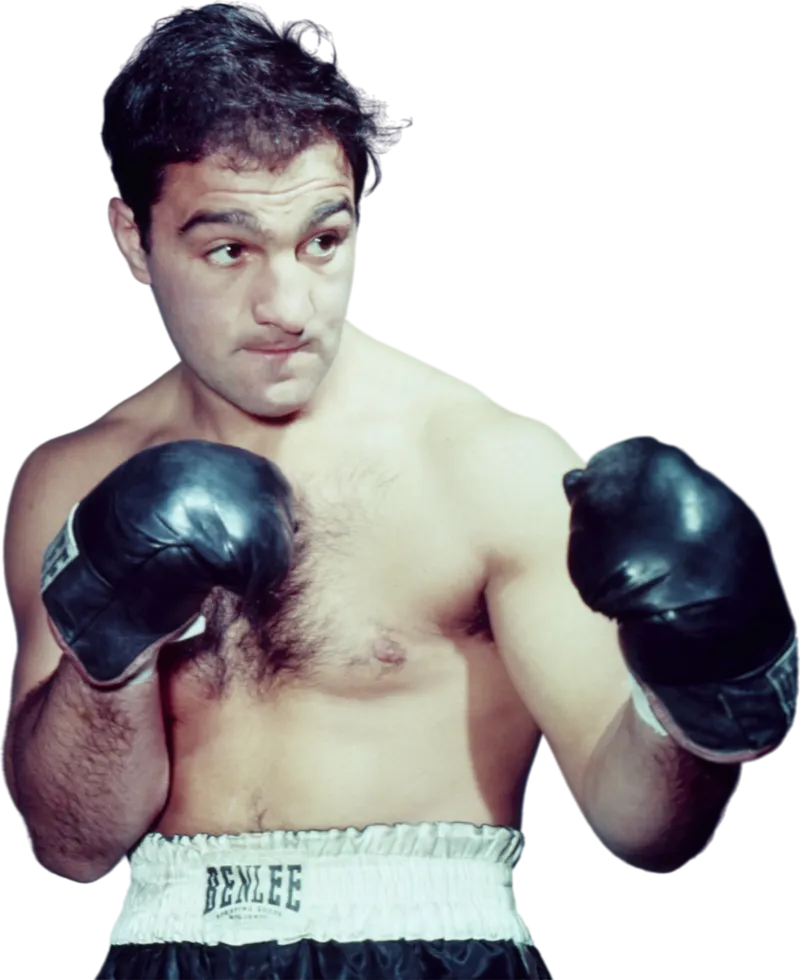
Photo of Rocky Marciano, via Wikimedia Commons
Rocky Marciano Net Worth 2026 - How the Brockton Blockbuster's Unbeaten Record Became an Eternal Asset
Rocky Marciano never earned a nine-figure purse. He never headlined a pay-per-view event or signed a streaming platform deal. He retired with a total career earnings figure that, in raw dollars, would not cover a single modern heavyweight's training camp budget. And yet, in 2026, the financial legacy of Rocco Francis Marchegiano — the son of Italian immigrants from Brockton, Massachusetts — endures as one of the most commercially potent in the history of the sport. The reason is singular and immovable: 49-0.
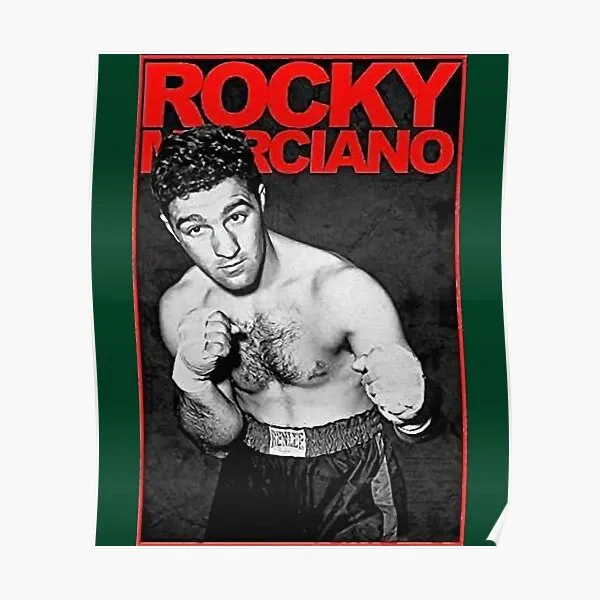 Photo: Rocky Marciano, via ih1.redbubble.net
 Photo: Brockton, Massachusetts, via www.landsat.com
No heavyweight champion in the history of professional boxing has retired undefeated. That fact, unrepeatable by definition, has transformed Marciano's record from a sporting achievement into a perpetual commercial asset — one that his estate, licensing partners, and the broader boxing industry continue to monetize more than five decades after his death.
Career Earnings in Context
Marciano turned professional in 1947 and won the heavyweight championship of the world in September 1952, stopping Jersey Joe Walcott in the thirteenth round in Philadelphia. His early career purses were modest — fights in New England venues before regional audiences generated hundreds rather than thousands of dollars. His development was gradual, and the financial rewards reflected that trajectory.
By the time he reached championship level, however, Marciano's purses had grown substantially. His six heavyweight title defenses — against Walcott, Roland LaStarza, Ezzard Charles (twice), Don Cockell, and Archie Moore — generated increasingly significant gates. The two Charles fights, held in 1954, were among the most commercially successful heavyweight bouts of the early television era. Marciano's estimated total career earnings from ring purses are placed at approximately $1.5 million to $2 million in period dollars — a figure that translates to roughly $17 million to $22 million in 2026 purchasing power when adjusted for inflation.
Those numbers place him firmly within the upper tier of mid-twentieth-century boxing earners, though far below what a comparable champion would command in today's media environment.
Television and the Early Broadcast Revenue Stream
Marciano's championship reign coincided with the rapid expansion of television in American households, and his fights were among the earliest heavyweight championship bouts to reach a national broadcast audience. The commercial implications were significant: gate receipts were supplemented by broadcast rights payments, and Marciano's visibility on the emerging medium created a national profile that enhanced his earning power both inside and outside the ring.
The relationship between boxing and television in the early 1950s was still being negotiated, and the revenue structures that would eventually make broadcast rights the dominant financial engine of the sport were not yet fully formed. Nevertheless, Marciano benefited from being the right fighter at the right moment in television history, and his promoter Al Weill understood the value of that positioning.
Post-Retirement Business Dealings
Marciano retired in April 1956 at the age of 32, citing his reluctance to risk the unbeaten record and his desire to prioritize family and financial security. His post-retirement years were characterized by a restless pursuit of business opportunity that, by most accounts, produced mixed results.
He invested in a variety of ventures — restaurants, real estate, and business partnerships — with varying degrees of success. He was known to be cautious about banks, reportedly preferring to keep cash in various locations, a habit that complicated the accounting of his estate after his death. He also participated in exhibition tours and personal appearances that generated income, leveraging his championship status and public profile in the years before that market became as structured as it is today.
His estimated net worth at the time of his death in August 1969 — he was killed in a small plane crash in Iowa, one day before his 46th birthday — was reported to be in the range of $1 million to $2 million, a figure that disappointed those who assumed his championship success had produced greater financial security.
The 49-0 Record as a Perpetual Licensing Asset
The most consequential financial development in Marciano's story occurred after his death. As the decades passed and no other heavyweight champion managed to retire undefeated, the uniqueness of his record appreciated in cultural and commercial value in a way that no financial planner could have anticipated.
In 2026, the Marciano estate — managed through arrangements involving his family and associated rights holders — generates ongoing revenue from several streams:
Memorabilia and Collectibles: Authenticated Marciano items — gloves, robes, photographs, contracts, and fight programs — command premium prices at major auction houses. The scarcity of authenticated material from his era, combined with the record's enduring fame, has kept demand consistently strong. Individual items regularly sell in the $5,000 to $50,000 range depending on provenance and condition.
Documentary and Broadcast Licensing: Marciano's story has been the subject of multiple documentary productions, biographical films, and historical retrospectives. Each production requires licensing agreements with rights holders, generating fees that flow to the estate. The 2021 biographical film Marciano and various ESPN and HBO historical productions have contributed to this revenue stream in recent years.
Brand and Image Rights: The Marciano name and likeness appear in boxing video games, historical merchandise, and commemorative products. These arrangements generate royalty income that, while individually modest, accumulates meaningfully across multiple partnerships.
The Superfight Simulation: The 1969 computer-simulated "superfight" between Marciano and Muhammad Ali — produced as a theatrical film and broadcast event — was a commercial phenomenon of its era, generating millions in revenue. While that specific property's direct earnings have long since been realized, it established a template for Marciano's commercial viability in hypothetical and entertainment contexts that continues to inform how rights holders position his legacy.
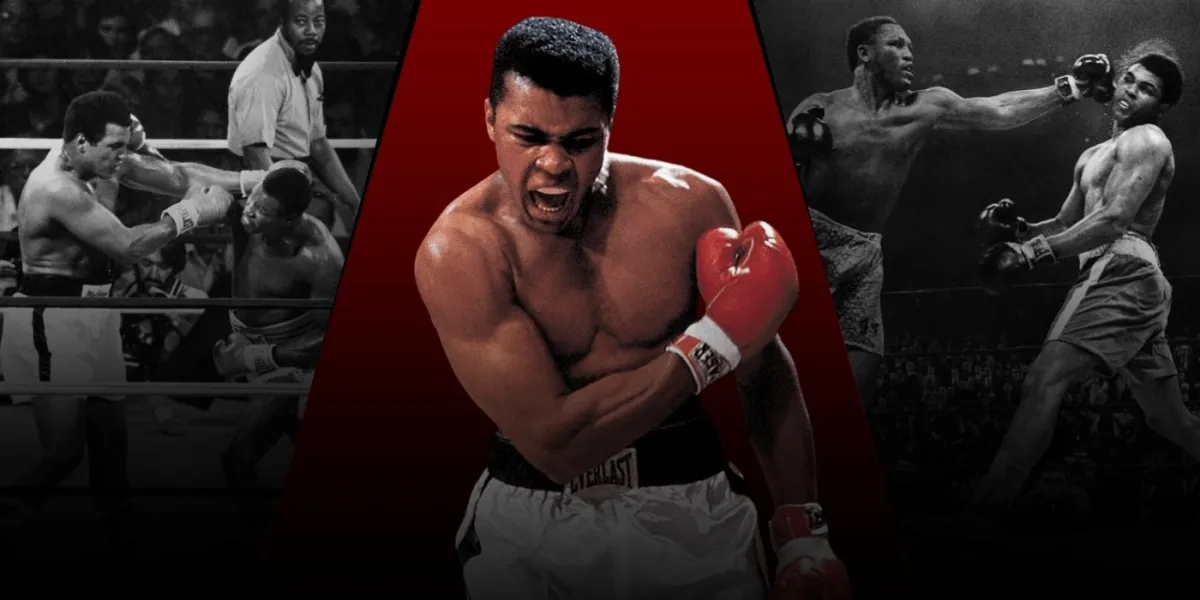 Photo: Muhammad Ali, via static0.thesportsterimages.com
The Undefeated Premium
What distinguishes Marciano's financial legacy from that of other historical champions is the structural advantage conferred by his record's uniqueness. Champions like Joe Louis and Sugar Ray Robinson were arguably greater fighters by conventional metrics, but they lost fights — and losses, in the commercial imagination, introduce complexity. Marciano's 49-0 is a clean, absolute statement that requires no qualification.
In a media environment saturated with content and constantly seeking definitive narratives, "the only undefeated heavyweight champion in history" is a phrase that sells itself. It requires no context, no asterisk, and no explanation to a casual audience. That simplicity is commercially invaluable.
Estimated Legacy Value in 2026
A precise net worth figure for a historical estate is inherently approximate, but financial analysts familiar with sports legacy valuation place the combined estimated value of Rocky Marciano's financial legacy — including estate holdings, licensing revenue streams, and brand equity — in the range of $5 million to $8 million in 2026. This figure encompasses the capitalized value of ongoing licensing income, the market value of authenticated memorabilia held by the estate, and the brand equity represented by the Marciano name in boxing and broader cultural contexts.
For a man who grew up in working-class Massachusetts and earned his living with his fists in an era when boxing's commercial infrastructure was a fraction of what it would become, that figure represents a remarkable posthumous financial achievement — one built entirely on the foundation of a record that no one has been able to match in the seven decades since he walked away from the sport unbeaten.