Jack Johnson Net Worth 2026 - The Galveston Giant's Extraordinary Rise and Financial Ruin

Photo of Jack Johnson, via Wikimedia Commons
In the annals of American sports finance, few stories carry the weight or complexity of Jack Johnson's. The man born in Galveston, Texas in 1878 to formerly enslaved parents would eventually command the largest fight purses of the early twentieth century, operate his own nightclubs and entertainment venues, and live with a conspicuous extravagance that was simultaneously a declaration of freedom and a financial liability. His estimated net worth at the peak of his earning power — roughly $250,000 in period dollars, equivalent to several million in contemporary terms — was systematically dismantled by a legal system determined to punish his success.
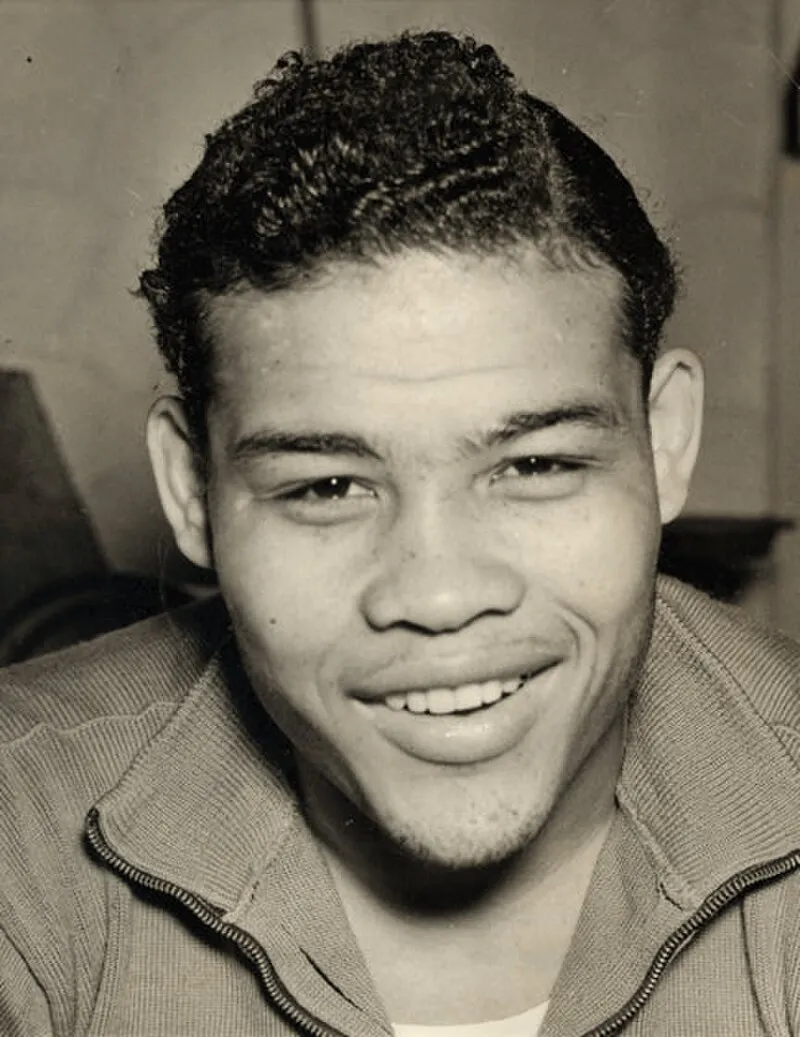
 Photo: Jack Johnson, via img.3movs.com
As of 2026, Jack Johnson's estate holds no active monetary value in the conventional sense, but his cultural legacy generates ongoing commercial and licensing revenue that places him among the most economically significant figures in boxing history.
The Fight Purses of a Barrier-Breaking Champion
Johnson won the heavyweight championship of the world on December 26, 1908, defeating Tommy Burns in Sydney, Australia, in a bout that required years of pursuit and negotiation to secure. The fight purse was approximately $5,000 for Johnson — a figure that reflected both the racial dynamics of the era and the promoter's calculation that Johnson's presence was a necessary commercial draw regardless of the discomfort it caused.
The financial stakes escalated dramatically as Johnson's championship reign continued. The 1910 "Fight of the Century" against James J. Jeffries in Reno, Nevada — promoted explicitly as a racial confrontation, with Jeffries cast as the "Great White Hope" — generated a gate of approximately $270,000, the largest in boxing history to that point. Johnson's share was estimated at $65,000, a sum that translated to genuine wealth in 1910 America. For context, the average annual wage for an American worker at the time was approximately $500.
Through his championship years from 1908 to 1915, Johnson accumulated fight earnings estimated in total at $150,000 to $200,000 — a remarkable sum, though one that was perpetually offset by his spending habits and the mounting costs of his legal battles.
The Café de Champion and Entertainment Ventures
Johnson's financial ambitions extended well beyond the ring. In Chicago, he opened the Café de Champion, a nightclub and entertainment venue that became one of the city's most fashionable establishments — and one of its most controversial, given that Johnson operated an integrated business in an era when such ventures attracted fierce opposition. The club generated meaningful revenue during its operation and reflected Johnson's instinct for self-promotion and brand extension.
 Photo: Café de Champion, via i1.sndcdn.com
He also invested in automobiles — he was among the earliest American celebrities to embrace the automobile as both transportation and status symbol, reportedly owning multiple vehicles at a time when car ownership was itself a marker of wealth. These investments were as much performative as financial; Johnson understood that visibility and spectacle were commercial assets.
His ventures in Europe during his years of exile following legal persecution also included exhibition bouts, theatrical appearances, and promotional activities that sustained his income through a period when American opportunities were foreclosed.
The Mann Act Prosecution and Financial Devastation
The machinery of Johnson's financial destruction was set in motion by the federal government through the Mann Act, a 1910 statute prohibiting the interstate transport of women for "immoral purposes." Johnson was convicted in 1913 in a prosecution widely understood — then and now — as a racially motivated effort to punish a Black man who had accumulated wealth, fame, and white female companionship in defiance of the era's social codes.
The legal costs were substantial. Attorney fees, court proceedings, and the operational disruption of his businesses during the trial period drained significant resources. His subsequent flight to Europe to avoid imprisonment — he would not return to the United States until 1920, when he surrendered and served his sentence — further severed him from his American commercial base and prevented him from capitalizing on the post-World War I boxing boom that enriched his successors.
By the time Johnson returned to American soil, the financial infrastructure he had built was largely gone. The Café de Champion had closed. His ring earnings were spent. His legal debts were substantial. He continued to fight professionally until 1938 — well past his competitive prime — largely out of financial necessity rather than sporting ambition.
Post-Career Struggles and Lasting Poverty
The final decades of Johnson's life were marked by financial precarity that stood in stark contrast to the wealth he had once commanded. He worked exhibition circuits, appeared in sideshows and theatrical productions, and accepted bookings that a champion of his historical stature should never have required. He died in an automobile accident in North Carolina in June 1946, reportedly leaving an estate of negligible value.
The racial inequality that had constrained his earning power throughout his career — limiting his access to the most lucrative promotions, denying him the corporate endorsements that white champions routinely received, and eventually weaponizing the legal system against him — ensured that his financial story ended in hardship rather than security.
Posthumous Legacy and Modern Commercial Value
In death, Jack Johnson's financial story has taken an unexpected turn. The 2005 Broadway production The Great White Hope, based on Howard Sackler's Pulitzer Prize-winning play, renewed mainstream American interest in his story. Ken Burns's 2004 documentary Unforgivable Blackness — which aired on PBS to significant viewership — generated licensing revenue and introduced Johnson to a new generation of viewers. Both properties created downstream commercial activity around Johnson's name and image.
Licensing arrangements for his likeness in documentaries, biographical programming, and historical content continue to generate modest but ongoing revenue for rights holders. The movement to secure a posthumous presidential pardon — granted by President Donald Trump in 2018 — generated a fresh wave of media coverage and cultural reassessment that further elevated Johnson's commercial profile.
In the memorabilia market, Johnson-related items — photographs, fight programs, period newspapers — command premium prices at auction, reflecting both his historical significance and the relative scarcity of authenticated material from his era.
A Fortune Built Against Impossible Odds
Jack Johnson's financial legacy cannot be assessed without acknowledging the system arrayed against him. That he accumulated significant wealth at all — as a Black man in early twentieth-century America, operating in a sport and a society that were both structured to limit his opportunity — is itself a testament to his extraordinary capability. That his fortune was ultimately destroyed by legal persecution rather than personal failure reframes his story not as a cautionary tale of excess but as a document of institutionalized economic violence.
His estimated peak net worth equivalent of $3 to $5 million in 2026 dollars was real, earned, and then taken. The cultural capital that replaced it — the documentaries, the plays, the pardons, the historical reckoning — is a different kind of wealth, and one that proves considerably more durable.